


The heat pump offers flexibility in output control, allowing adjustments through modulation and cascading. It can attain high flow temperatures of up to 70 °C.
NEW: EASYPELL HEAT PUMP
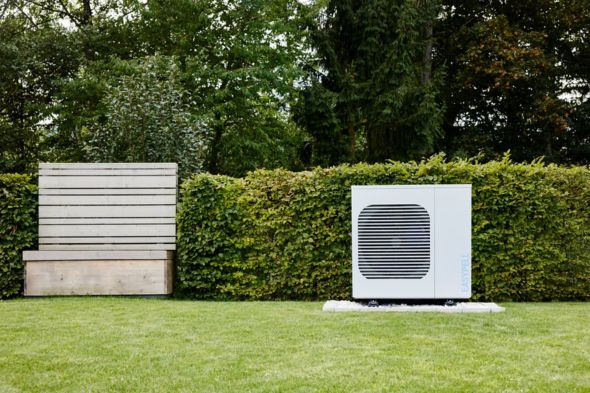
With the newly developed EASYPELL heat pump you will enjoy independent and comfortable heating and cooling for your home.
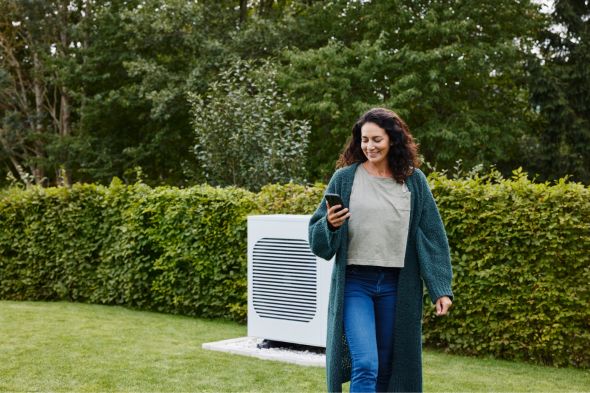
Thanks to a modern mobile app, the exceptionally quiet EASYPELL heat pump can be digitally adjusted to your precise requirements.
Heating your home with ambient air has never been this affordable & sustainable.


PRODUCT BENEFITS OF EASYPELL HEAT PUMP
Affordable & eco-friendly
Using ambient air as the primary heat source is a sustainable solution that is both cost-effective and climate-friendly.
Exceptionally quiet in operation
The use of high-quality soundproofing materials and advanced sound absorption techniques effectively minimizes noise and vibration.
Climate-friendly refrigerant R290
The refrigerant R290 is an environmentally friendly and future-oriented solution with outstanding performance value also at higher temperature.
High efficient performance

Support & service worldwide
Our worldwide partner network guarantees reliable heat: Our customer service is experienced, efficient and always quickly on site.

Long warranty period
Quality and durability are core values of our products. That’s also what our 3-year overall and 5 year compressor guarantee stands for.

PLEASE CONTACT US
Do you want a personal consultation, free information about our products or simply have a question?
Contact us
OVERVIEW OF ALL FEATURES






PRODUCT CHARACTERISTICS
The focus on the essential brings you remarkable beneftis
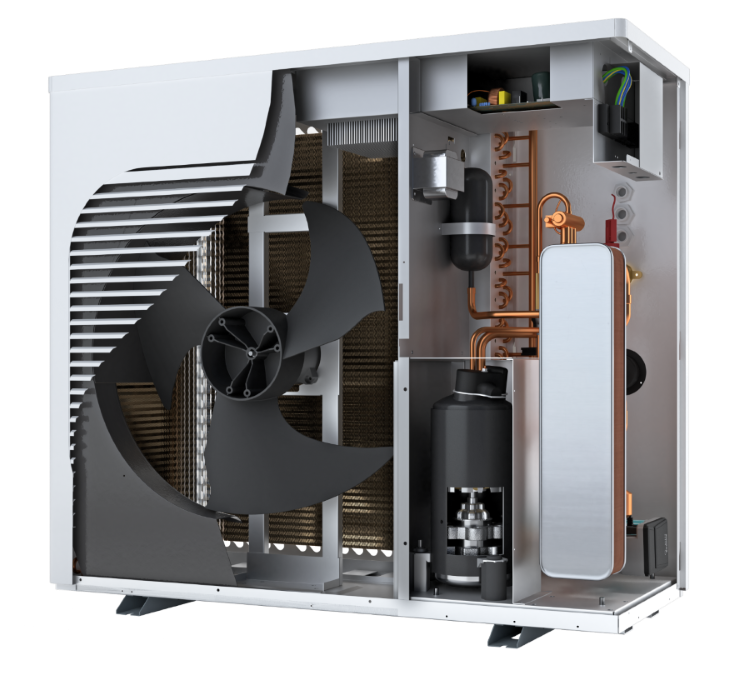
FULL DC INVERTER TECHNOLOGY
advanced modulation control for electricity savingELEGANT AND EXCLUSIVE DESIGN
slim constructionENVIRONMENTALLY FRIENDLY REFRIGERANT R290
R290 with a GWP of 3LARGELY DIMENSIONED AIR HEAT EXCHANGER
OPTIMIZED AIR FLOW
noise minimization through smart fan and conduct designICE-FREE DEFROST
because of a thermal componentOUTDOOR TEMPERATURE REGULATED HEATING CIRCUIT CONTROL
for optimal room climateCOMBINABLE WITH BUFFER AND DHW TANK
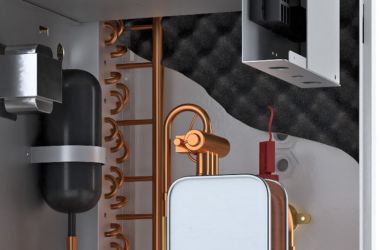
for heating and coolingSPECIAL SOUNDPROOF COTTON
stronger sound absorption, insulation, and reduction than standard material.DOUBLE-SOUNDPROOFED COMPRESSOR
extremly silent during operationMODULATION AND POWER ADJUSTMENT
for higher efficiency and a longer lifetimeHIGH-EFFICIENCY PUMP INCLUDED
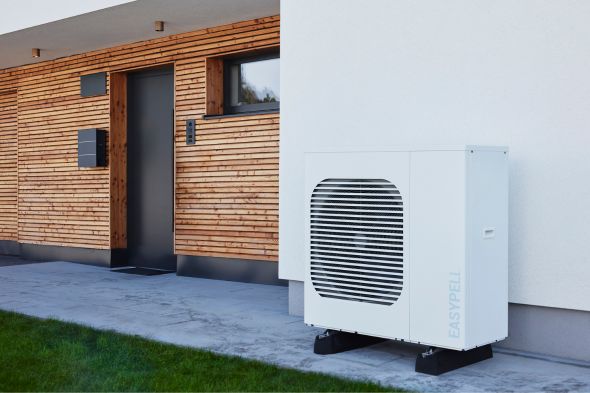
speed-regulated with energy flow measurementTHE PERFECT ADDITION FOR YOUR HOUSE

FREQUENTLY ASKED QUESTIONS & ANSWERS
Regarding heating and cooling with a modern heat pump from EASYPELL
An air source heat pump works by transferring heat from one location to another, using a refrigeration cycle.
Firstly the evaporator coil, a low-pressure, low-temperature refrigerant (commonly a fluid with a low boiling point) absorbs heat from the outside air. This absorption causes the refrigerant to evaporate and turn into a low-pressure gas.
The compressor then increases the pressure and temperature of the low-pressure gas. As a result, the refrigerant transforms into a high-pressure gas exuding a high temperature.
Afterwards, the hot, pressurized gas flows into the condenser coil, usually located indoors. Here, the refrigerant releases the absorbed heat to the indoors.
The physical process causes the refrigerant to condense back into a high-pressure liquid.
The physical process causes the refrigerant to condense back into a high-pressure liquid.
The high-pressure liquid then passes through an expansion valve, which reduces its pressure and temperature. This transforms the refrigerant back into a low-pressure, low-temperature gas, and the cycle repeats.
The cost of a heat pump can vary widely depending on several factors, including the type of heat pump, its capacity, efficiency rating, and installation requirements.
Air Source Heat Pumps such as the EASYPELL Heat Pump, are generally more affordable compared to ground source (geothermal) heat pumps.
Prices can range from a few thousand dollars for smaller, less efficient models to several thousand dollars for high-efficiency units with advanced features.
For a precise indication of price it's recommended to obtain quotes from professionals to get a more accurate estimate tailored to your specific needs and location.
Additionally, inquire about available incentives, rebates, or tax credits for energy-efficient home improvements, as these can help offset the upfront costs.
Request price
Prices can range from a few thousand dollars for smaller, less efficient models to several thousand dollars for high-efficiency units with advanced features.
For a precise indication of price it's recommended to obtain quotes from professionals to get a more accurate estimate tailored to your specific needs and location.
Additionally, inquire about available incentives, rebates, or tax credits for energy-efficient home improvements, as these can help offset the upfront costs.
Request price
Whether a heat pump is better than a traditional air conditioner (AC) depends on your specific needs and the climate in which you live.
Here are some key points to consider when comparing heat pumps and air conditioners:
Here are some key points to consider when comparing heat pumps and air conditioners:
The significant advantage of a heat pump compared to an AC is their ability to provide both heating and cooling functions.
Air conditioners, on the other hand, only offer cooling. If you need both heating and cooling throughout the year, a heat pump can be a more versatile and cost-effective solution.
Air conditioners, on the other hand, only offer cooling. If you need both heating and cooling throughout the year, a heat pump can be a more versatile and cost-effective solution.
Heat pumps are generally more energy-efficient than traditional air conditioners because they move heat rather than generate it.
The initial cost of a heat pump, including installation, can be higher than that of a traditional air conditioner. However, the ability to provide both heating and cooling may make it a cost-effective investment in the long run.
Heat pumps can be more cost-effective in terms of monthly utility bills, especially in climates where the heating season is longer than the cooling season. The energy efficiency of a heat pump can result in lower operating costs.
Heat pumps are considered more environmentally friendly because they use electricity to move heat rather than burning fossil fuels to generate heat. This can contribute to lower carbon emissions if the electricity comes from renewable sources.
Yes, heat pumps function normally in winter. However, their efficiency can decrease as the outside temperature drops.
In very cold climates, some air-source heat pumps may require supplemental heating to maintain the desired indoor temperature.
When considering a heat pump for winter use, it's advisable to:
When considering a heat pump for winter use, it's advisable to:
Choose a model with a high Heating Seasonal Performance Factor (HSPF): This rating indicates the efficiency of the heat pump during the heating season.
Ensure proper sizing and installation: A correctly sized and well-installed heat pump is more likely to operate efficiently.
Explore models with advanced features: Some heat pumps have features like two-speed compressors or variable-speed fans that contribute to better performance in varying conditions.
Consulting with a qualified HVAC professional and testing if a heat pump is suitable for the climate of your location can help ensure effective heating performance in winter.
Heat pumps do require some maintenance. However, normally maintenance expenditure is kept quite low when having a heat pump.
It's advisable to schedule professional maintenance at least once a year, typically before the heating or cooling season begins. A qualified HVAC technician can perform a thorough inspection, identify potential issues, and address them promptly. Regular maintenance not only ensures the efficient operation of the heat pump but also helps prevent costly repairs and extends the system's lifespan.
Yes, in most cases you need a planning permission for your heat pump.
Check with your local planning authority or local council early on in the planning process to determine the specific regulations and requirements for heat pump installations in your area. They can provide guidance on whether planning permission is needed and the process to follow.
Yes, air source heat pumps (ASHPs) are generally considered environmentally friendly and sustainable heating and cooling solutions.
Here are several reasons why ASHPs are considered good for the environment:
- Renewable Energy Source:
Air source heat pumps extract heat from the outdoor air, which is a renewable resource. Unlike fossil fuel-based heating systems, ASHPs do not rely on the combustion of non-renewable resources to generate heat. - Reduced Greenhouse Gas Emissions:
ASHPs use electricity to power the compressor and other components in the system. If the electricity comes from renewable sources such as wind, solar, or hydropower, the overall carbon footprint of the heat pump can be significantly lower compared to traditional heating systems that rely on burning fossil fuels. - High Energy Efficiency:
ASHPs are known for their high energy efficiency. They can provide more heat energy than the electrical energy they consume, making them an efficient option for space heating. This efficiency contributes to lower energy consumption and reduced environmental impact. - No On-Site Combustion:
Unlike gas or oil-based heating systems, ASHPs do not involve on-site combustion. This eliminates the direct emissions of pollutants and particulate matter associated with burning fossil fuels for heating. - Versatility and Dual Functionality:
ASHPs can provide both heating and cooling functions, making them versatile throughout the year. This dual functionality can lead to a reduction in the need for separate heating and cooling systems, further contributing to energy savings. - Incentives and Support:
In many regions, governments and local authorities offer incentives and support for the installation of air source heat pumps as part of efforts to promote renewable energy and reduce carbon emissions. - Decreased Reliance on Fossil Fuels:
By choosing an air source heat pump, homeowners and businesses can reduce their dependence on fossil fuels for heating. This shift contributes to overall efforts to transition to cleaner and more sustainable energy sources.
The EASYPELL heat pump offers several benefits, making it an attractive and environmentally friendly option for heating and cooling residential and commercial spaces.
- Energy Efficiency:
ASHPs are known for their high energy efficiency. They can provide more heating or cooling energy compared to the electrical energy they consume. This efficiency contributes to lower energy bills and reduced environmental impact. - Renewable Energy Source:
ASHPs extract heat from the outdoor air, which is a renewable resource. Unlike systems that rely on the combustion of fossil fuels, ASHPs use electricity to transfer heat, making them a more sustainable option. - Versatility:
ASHPs can provide both heating and cooling functions. This dual functionality eliminates the need for separate systems, such as furnaces and air conditioners, and provides year-round comfort. - Lower Carbon Footprint:
The carbon footprint of an ASHP can be further reduced if the electricity used to power the system comes from renewable sources, such as wind, solar, or hydropower. This is an important consideration for overall environmental impact. - Safety:
ASHPs operate without on-site combustion, reducing the risk of accidents related to gas leaks or carbon monoxide emissions. They are generally considered safer than systems that burn fossil fuels for heating. - Reduced Heating Bills:
While the initial upfront cost of an ASHP installation can be higher, the potential for lower heating bills over time can result in cost savings. Energy-efficient operation and the use of renewable energy sources contribute to reduced overall energy consumption. - Low Maintenance Requirements:
ASHPs typically have fewer maintenance requirements compared to combustion-based heating systems. Regular maintenance, such as cleaning filters and checking components, can contribute to the longevity and efficient operation of the system. - No Need for Fuel Storage:
Unlike systems that rely on fuel storage, such as oil tanks, ASHPs do not require on-site fuel storage. This eliminates the need for fuel deliveries and storage infrastructure. - Government Incentives:
In many regions, governments and local authorities offer incentives, rebates, or tax credits to encourage the installation of air source heat pumps, making them more financially attractive for homeowners and businesses.